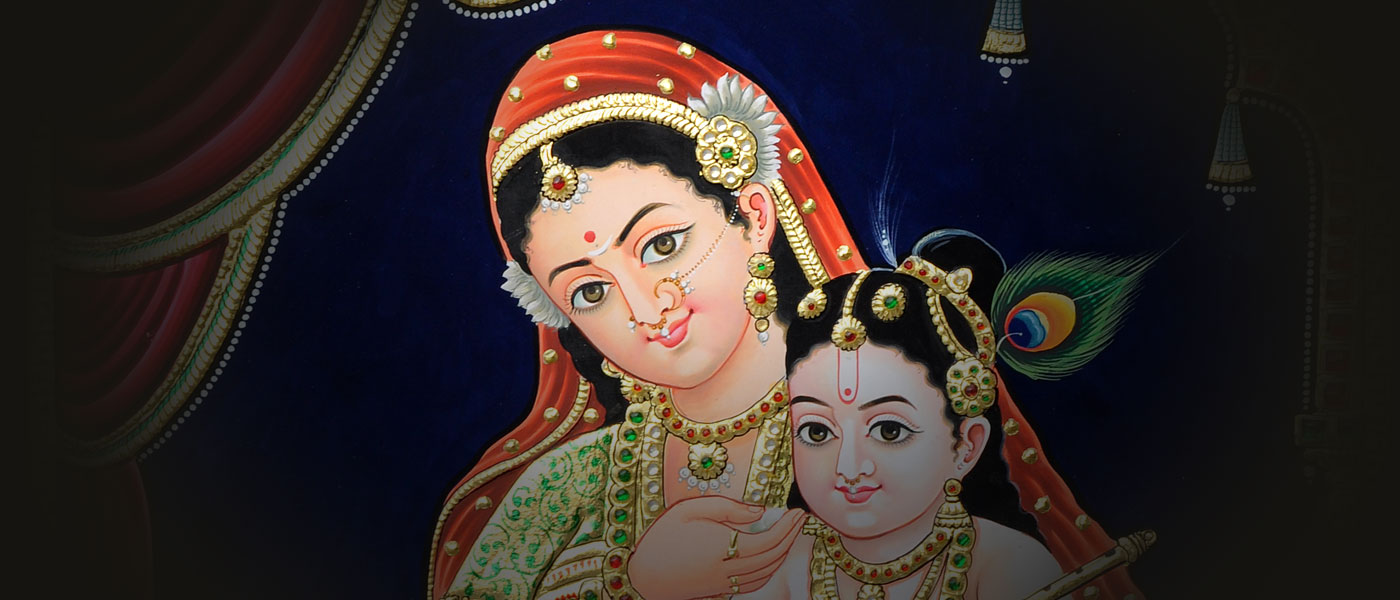
Thanjavur paintings basically signify those created using a unique style and technique, which originated in Thanjavur during the Maratha period in the 16th Century.
A typical Thanjavur painting would have a main figure, a deity, with a well-rounded body and almond shaped eyes. This figure would be housed in an enclosure created by means of an arch, curtains, etc. The painting would be made by the gilded and gem-set technique - a technique where gold leaves & sparkling stones are used to highlight certain aspects of the painting like ornaments, dresses, etc.
As you would see, the paintings would be bright, vibrant and breathtakingly beautiful. The impact in a darkened room is that of a glowing presence. While most of the paintings would depict the Child Krishna and his various pranks, paintings of other deities were also created.
Over a period of time, changes have occurred in the stylization - for example, the figures are no longer round. Presiding deities of various famous temples are also being depicted in the paintings. The technique is now more in use than the style.
Traditional Thanjavur paintings are possessed as heirlooms.