Tanjore Paintings: A Unique Legacy in Indian Fine Arts
Discover the rich heritage of Thanjavur, also known as Tanjore, paintings - a distinguished art form renowned for its vibrant color palette and distinctive style. More

Exploring the History of Tanjore Paintings
Step into the captivating world of Thanjavur paintings, a school of art originating in Thanjavur during the Maratha rule in the 16th century. Flourishing from the 17th to the 19th century, this art form boasts a unique aesthetic. More

How to Order
Connect with our skilled artist to explore dimensions and painting details. Utilize the convenient contact form to share your requirements. Sudharsan Art & Crafts, Bangalore and Sudharsan Tanjore Paintings, Trichy. Contact
Thanjavur Painting
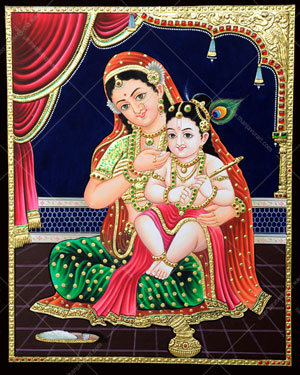
Thanjavur Painting, originating in the 16th Century during the Maratha period in Thanjavur, is characterized by a distinctive style and technique.
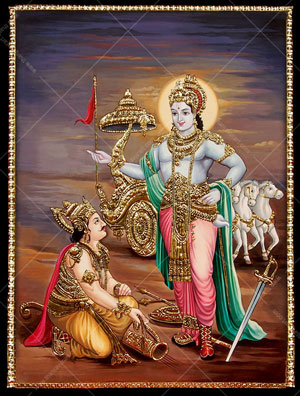
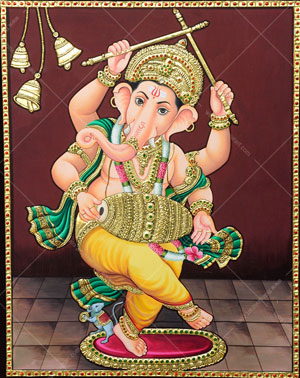
These paintings typically feature a central deity with a well-rounded physique and almond-shaped eyes, enclosed within arches or curtains. The technique involves the use of gilding and gem-setting, where gold leaves and sparkling stones are employed to accentuate ornaments and attire.
The result is a vivid, captivating, and visually stunning artwork that emanates a radiant presence, particularly in dimly lit environments. While many Thanjavur paintings depict the playful antics of Child Krishna, others showcase various deities. Over time, there have been shifts in stylistic elements, such as the alteration of figure shapes, and an expansion to include presiding deities from renowned temples.
These traditional Thanjavur paintings hold immense sentimental and cultural value, often passed down as cherished heirlooms.
Exploring the Rich Heritage of Tanjore Art: Origins and Evolution
Tanjore art, named after the town in South India where it originated, is a distinguished form of artistic expression. Its roots trace back to the Vijayanagara kingdom and flourished further under the patronage of the Nayakas and Marathas after the kingdom's collapse in 1565.
Vijayanagar paintings are characterized by slender figures, intricate features, meticulous attention to detail, and the distinctive presence of a second eye on the subjects. Under the Nayakas' influence, the art form evolved to include rounded limbs, almond-shaped eyes, elaborate attire, and a vivid color palette of red, green, and white backgrounds, adorned with lavish decorations.
The Marathas, being newcomers to the South, upheld the traditional essence of Thanjavur art while incorporating secular themes and European influences into the artistic lexicon. Throughout its evolution, Tanjore art has remained deeply rooted in the ancient Hindu Puranas and epic tales of the Ramayana and Mahabharata, which continue to dominate its narrative.
A fundamental aspect of Tanjore art is its enduring connection with royalty, a testament to the painstaking craftsmanship required to create these aesthetic masterpieces. This artistic tradition has not only survived through the ages but continues to thrive, embodying a rich cultural legacy.
Unraveling the Artistry of Tanjore Paintings: Techniques and Intricate Process
Tanjore paintings possess a mesmerizing depth that lends a three-dimensional quality to a two-dimensional medium. This effect is achieved through the meticulous application of embossing and the lavish use of gold leaf, two defining steps in the creation of these awe-inspiring artworks.
The skilled Tanjore artisans, who have honed their craft through generations, commence the process by carefully selecting a sturdy structure for the painting. Layers of wood and starboards are meticulously bonded together with a specialized paste, ensuring the artwork's longevity and protection from potential damage. This prepared frame is then meticulously covered with a fine cloth, typically muslin (Sallathuni), secured with a tamarind paste glue, and layered with lime paste or "Sudha".
The resulting canvas serves as a foundation for the artist's vision. Initial rough sketches, rendered in coal, provide a blueprint for the intricate patterns that will later adorn the images. The application of "Sukkan" (un-boiled limestone) further elevates these patterns, contributing to the distinctive high-relief effect. To add opulence, gemstones, glass pieces, semi-precious stones, and gold leaf are delicately affixed to the drawing. The artist then introduces vivid colors sourced from natural pigments, adhering to a defined color palette.
Gold leaf assumes a pivotal role in Tanjore art, gracing the elevated areas of the painting or adorning the flat canvas, enhancing attire, jewelry, and decorative elements with its signature golden sheen. The final touch involves the delicate rendering of the deity's eyes, a process laden with artistic and ritual significance in Indian art, known as the "opening of the eyes" or "Kandera Derachina".
This entire process is an intricate one, demanding the artist's unwavering attention to detail. Every step allows for precision and correction, ensuring even the minutest errors are rectified before the artwork reaches its final form."
Elevate Your Space with Gilded Tanjore Paintings
Tanjore paintings, renowned for their resplendent beauty, can be categorized into two main types: depictions of individual deities and mesmerizing scenes from Hindu mythology. The former portrays deities in celestial settings, surrounded by priests, devotees, and secondary gods and goddesses, evoking the ambiance of a sacred temple interior. These portable masterpieces offer a personal and transcendental experience, inviting you to gaze into the divine almond eyes.
The latter category brings to life the timeless tales of Hindu epics like the Mahabharata, Ramayana, and Puranas. Examples like "Meenakshi-Kalyanam" (the divine union of goddess Meenakshi and Lord Shiva) and "Kalinga-Krishna" (Krishna's dance atop the serpent Kaaliya) showcase the artistry of Tanjore painters as skilled storytellers. These artworks boast a rich tapestry of subjects, each meticulously detailed with distinct skin tones.
The enduring appeal of Tanjore paintings lies in their diverse subjects and the unwavering adherence to their original artistic form. This steadfastness has allowed them to withstand fluctuations in demand over time. In today's modern and minimalist design sensibilities, a luminous Tanjore painting serves as the ideal choice to infuse character into your living space.
Incorporating Tanjore Paintings into Your Spaces
In Your Place of Worship:
Enhance your sacred space with Tanjore paintings of Ishta Devata (personal deity) and Kula-Devata (family deity) elegantly framed in sturdy teakwood. This time-honored tradition offers a simple yet powerful way to introduce this splendid art form into your home. Placed at the center of your place of worship, a Tanjore painting emanates a profound spiritual aura for you to absorb.
In Your Office:
Modern workspaces often lack distinctive interiors, appearing monotonous and uninspiring. Elevate your professional environment by adorning the conference hall or gallery with a sizable Tanjore painting. This transformative addition can turn your workplace from a dull and stressful setting into a spiritually enriched and artistically captivating one.
In Your Home:
Foster connection and conversation with your guests through captivating stories. Adorn your walls with Tanjore paintings depicting scenes from Indian religious traditions, aglow with golden hues and captivating shades. These visual aids serve as a gateway to share the captivating narratives they hold, simultaneously infusing your home with an exotic and mystical ambiance."
About the Artist
Mr. C.Kamaraj - Artist
With more than two decades of expertise, he crafts vibrant and distinctive Thanjavur paintings. His creations grace prominent galleries and commercial venues, showcasing his mastery. Additionally, he is the proud proprietor of Sudharsan Art & Crafts, Bangalore and Sudharsan Tanjore Paintings, Trichy.
Contact Details
Phone No. +91 94437 65771